

How Do AI Interviews Work? (And What They Cannot Do)
An AI interviewer is a consistent first conversation. It is not a hiring manager. Here is where the line sits and why.
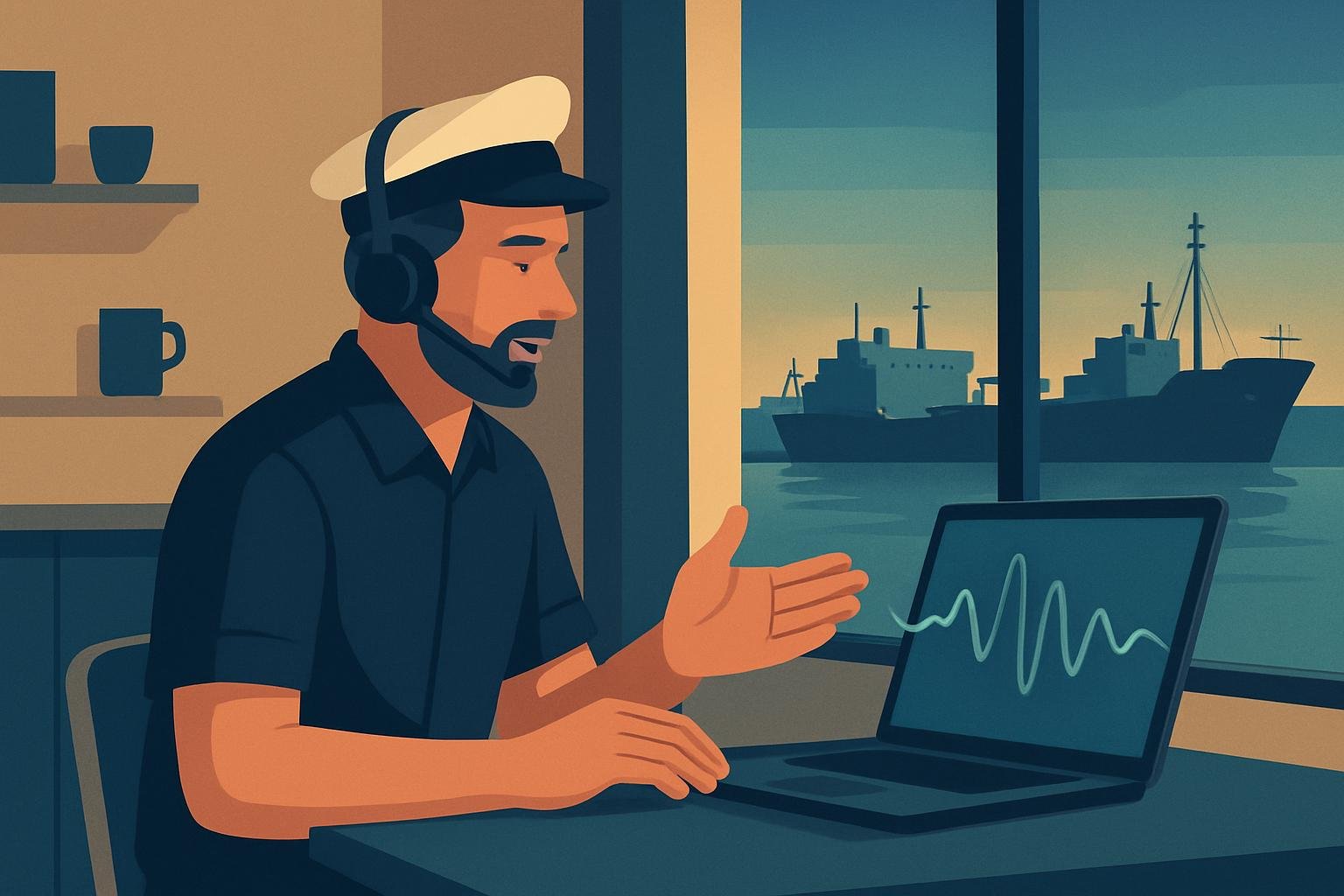
How do AI interviews work, and should a shipping company trust one? Here is our position. An AI voice interview is a good first conversation and a bad final decision. It can ask every candidate the same quality of question at any hour, listen without getting tired, and write up what was said with evidence. It cannot tell you who to hire, and a tool that claims otherwise is selling you something you should not buy.
This article explains the mechanics of an AI voice interview in plain terms, then draws the line between what it does well and what must stay with a person.
The conventional view is too generous and too harsh
Two opinions dominate. Vendors say AI interviews remove bias and find the best candidate. Sceptics say a machine cannot judge a human being and the whole idea is disrespectful to candidates.
Both miss what a first-round interview is for. In shipping, the first conversation answers a narrow set of questions. Does this person know the work their resume describes? Can they explain it clearly in the working language of the office or the ship? Is there anything that rules them out? That is a structured task, and structure is what software is good at.
The hiring decision is different. It weighs character, team fit, references and the judgment of someone accountable for the outcome. That is not a structured task, and it should not be handed over.
How do AI interviews work in practice?
Here is the sequence inside Marine Ideas, from the candidate’s side and then the recruiter’s.
Before the call
A recruiter enables an interview for a specific applicant. Nobody is interviewed by default. The interviewer is then briefed with two documents: the candidate’s resume and the job description. This is why the questions are about the candidate’s own claimed experience against the role’s requirements, and not a generic script.
Organisations can add their own rules, either for every job or for one role. A typical rule names a topic that must be covered or a deal-breaker to probe. These rules steer the questions. They are not shown to the candidate.
During the call
The candidate opens the interview in a browser and speaks. The audio connection runs directly between the candidate’s browser and the speech model. There is no app to install.
Turn-taking is manual. The candidate answers, and when they have finished, they press “Next question”. We chose this over automatic silence detection on purpose. Automatic detection cuts people off when they pause to think, and it punishes anyone speaking a second language, which describes a large share of the maritime workforce. A button gives the candidate control of the pace.
Three things happen in the background.
- The transcript is saved as the interview goes on. If the connection drops, there is still a record that can be scored.
- The audio is recorded. Recruiters can later play back the answer to an individual question.
- Integrity signals are captured. Periodic webcam snapshots and a count of tab switches, shown only to the recruiter.
Each candidate gets one attempt per job. If the call is interrupted, they can rejoin while time remains. A fresh attempt needs a retake approved by the recruiter.
After the call
Once the interview is submitted, the transcript is turned into a structured report. It contains:
- A score for each question, with the evidence it was based on.
- Ratings by competency.
- Strengths and concerns.
- Any deal-breaker flags raised by the organisation’s rules.
- A recommendation for the recruiter.
The candidate sees their own result, but not the recruiter summary, the recommendation or the deal-breaker flags. Those are advice to the person making the decision, not a verdict on the person interviewed.
Three things an AI voice interview does well
It is consistent
A human interviewer on their ninth call of the day is not the same interviewer who took the first. Questions get shorter, follow-ups get skipped, and the candidate at 4pm gets a worse hearing than the candidate at 9am. An AI interviewer briefed with the same job description asks at the same depth every time. The recruiter sees a seafarer in Manila and a shore-side candidate in Rotterdam assessed against the same requirements.
It respects the candidate’s clock
Shipping hires across time zones, and seafarers on leave are not sitting by a laptop during your office hours. An interview that can be taken on a Sunday evening removes a week of scheduling emails. In a tight labour market, the company that replies first often gets the candidate.
It leaves evidence
A first-round phone screen usually leaves three lines of notes and an impression. An AI interview leaves a transcript, per-question audio and a report that quotes what was said. When a hiring manager asks why a candidate went forward, there is something to show them. When a candidate challenges an outcome, there is something to review.
What an AI voice interview cannot do
This is the half that product pages leave out.
It cannot verify anything. The interviewer hears what the candidate says. It does not know whether the sea service is real, whether the certificate of competency is valid or whether the reference would agree. Document checks and reference calls are still yours. For knowledge specifically, a proctored exam is better evidence, and our guide to verifiable digital certificates for maritime skills explains how those are checked.
It cannot judge seamanship or operational calm. A person can describe the right response to a dragging anchor and still freeze when it happens. Spoken answers measure knowledge and communication. They do not measure conduct under pressure.
It cannot read the room. A human interviewer notices hesitation that means discomfort, and can stop to ask about it with tact. A model works from the words. It will miss things a good interviewer catches, and it will sometimes mark down a nervous but capable person.
It can be wrong about accents and audio. Speech recognition is not equally accurate for every accent or every microphone. This is the reason recorded audio matters: when the transcript looks odd, a recruiter can listen to the answer itself.
It cannot be accountable. A recommendation in a report is an input. If nobody reads the transcript and the recommendation is followed automatically, the organisation has delegated a hiring decision to software. Regulators are clear about how they see that. The EU AI Act lists AI used to select and evaluate job candidates among its high-risk uses, which brings obligations around human oversight.
The strongest objection, answered
The best argument against AI interviews is about dignity. Asking someone to speak to a machine tells them their time is worth less than yours.
It is a fair point, and the answer depends on how the tool is used. If the AI interview replaces every human conversation, the objection stands. If it replaces the fifteen-minute phone screen that half of applicants never received anyway, the candidate is better off. They get a full hearing they would not otherwise have had, at a time they chose, with a record they can see. Then a person talks to them.
Three practices keep it on the right side of that line.
- Tell candidates in the job description that an AI interview is part of the process. Our guide on how to write a job description for a shipping company treats this as a required step.
- Give candidates their result.
- Never reject on the report alone. A person reads the transcript first.
What to do about it
If you are a recruiter considering AI interviews, here is a workable position.
- Use the interview after screening, not instead of it. Interview the candidates who already match the role. Our walkthrough of AI resume screening for maritime roles covers that earlier step.
- Write your organisation’s rules before the first interview. Two or three topics you always want probed is enough.
- Read the concerns section of each report before the recommendation. It is the more useful half.
- Listen to at least one answer per shortlisted candidate. It takes two minutes and it keeps you honest about what the transcript can miss.
- Keep the final interview human.
The wider pattern is the same one playing out across shore-side shipping work. The tools are good enough to take over the routine and not good enough to take over the responsibility.
A note for candidates
If you have been invited to an AI voice interview, the preparation is the same as for any first conversation, with two additions. Test your microphone in a quiet room first, because the transcript is only as good as the audio. And take your time. You control when the next question comes, so finish your thought before you press the button. Nobody is scoring your speed.
See one for yourself
The quickest way to form a view is to take an interview as a candidate would, then read the report it produces. Try Marine Ideas free. No credit card is required.