

Calculating the Breaking Point: Why 20,000 Seafarers Can’t Wait for a Perfect Peace
20,000 seafarers are trapped in the Arabian Gulf as experts argue the psychological cost of waiting now outweighs the risk of transiting the Strait of Hormuz.
TL;DR
The psychological toll on 20,000 seafarers trapped for two months in the Arabian Gulf has surpassed the calculated physical risks of transiting the Strait of Hormuz.
Security firm 3iSea advocates for an 'engineered' approach to transit, prioritizing managed movement over the indefinite pursuit of a perfectly safe environment.
While geopolitical rhetoric escalates between the US and Iran, the insurance market continues to provide war cover, signaling a shift toward normalizing high-risk operations.
Twenty thousand seafarers are currently staring at the horizon of the Arabian Gulf, waiting for a signal that may never come. For sixty days, the global shipping industry has treated the Strait of Hormuz as a locked door, yet the walls of the waiting room are beginning to close in. Security analysts now suggest that the paralysis of the fleet is becoming more dangerous than the missiles it seeks to avoid. This shift in perspective marks a critical turning point in the maritime standoff between regional powers and global trade.
The scale of the human presence currently idling in the Arabian Gulf is staggering. Twenty thousand individuals, roughly the population of a small city, are suspended in a state of professional and personal limbo. These crews are not merely waiting for cargo; they are waiting for permission to exist within a high-stakes geopolitical theater. The psychological erosion of sixty days spent at anchor, within sight of a potential combat zone, creates a volatility that no safety manual can adequately address.
Crew fatigue is often measured in hours of work, but the fatigue of uncertainty is a different beast entirely. Seafarers on vessels trapped behind the Strait face a unique brand of isolation, where communication with home is strained by the stress of their location. Shipowners are finding that the 'safety' of staying put is a relative term when morale collapses. When a crew’s mental resilience breaks, the operational risk to the vessel increases more sharply than any external kinetic threat.
Industry experts are sounding the alarm on the long-term retention of these maritime professionals. The shipping industry already struggles with a talent shortage, and the sight of 20,000 colleagues being used as geopolitical chess pieces does little to attract new recruits. If the maritime community cannot protect its people from the trauma of indefinite detention, it may find itself with plenty of ships but no one willing to sail them. The human element is the most fragile link in the supply chain.
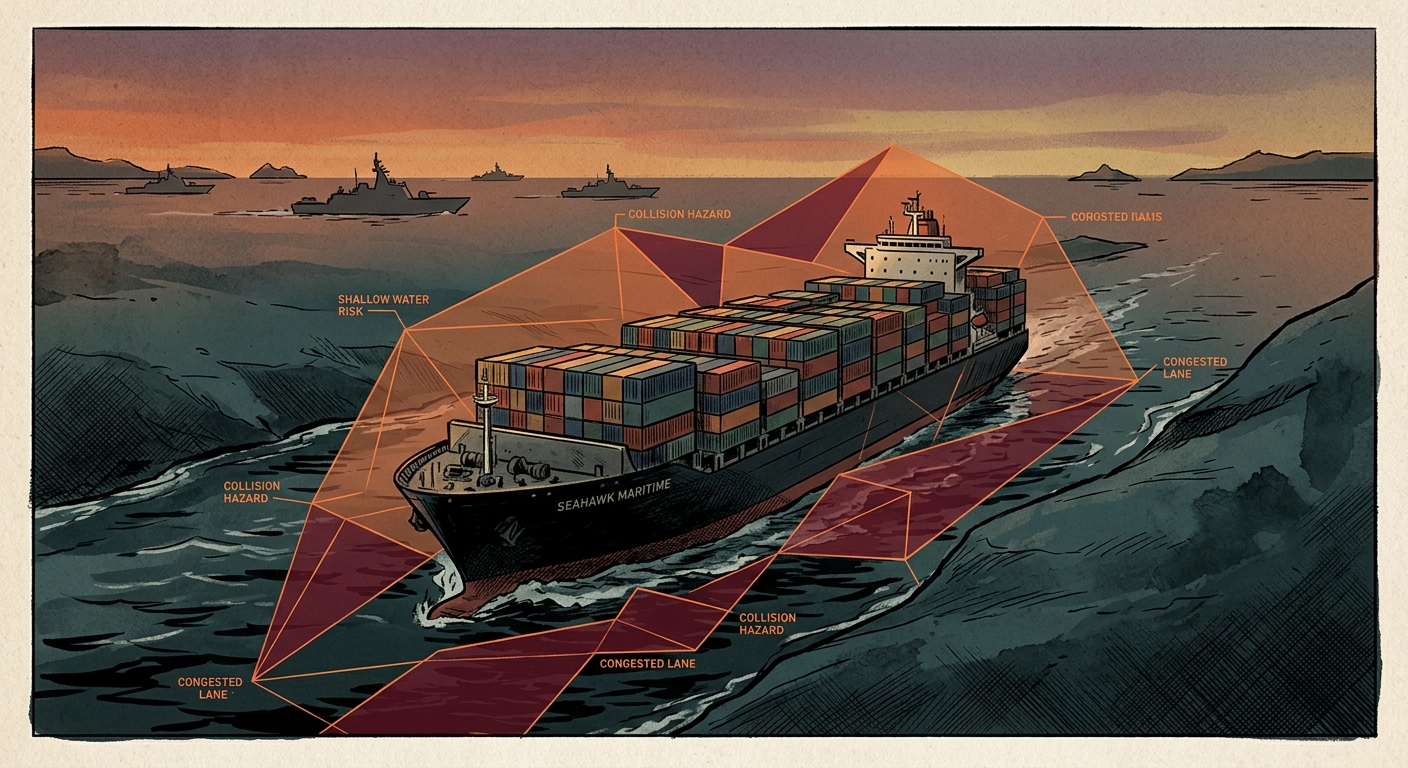
Nicholas Davis, chief of maritime security firm 3iSea, has proposed a shift from passive avoidance to active management. The traditional approach to maritime security often waits for a binary 'safe' or 'unsafe' signal from government authorities. Davis argues that in the current era of hybrid warfare and persistent low-level conflict, waiting for a perfect peace is a recipe for permanent paralysis. Instead, 3iSea suggests that transits can be 'engineered' through a combination of intelligence, technology, and tactical maneuvering.
This engineering of safety involves more than just hiring armed guards or increasing hull insurance. It requires a granular understanding of the threat environment, from the patterns of Iranian patrol boats to the specific signatures of loitering munitions. By breaking down the transit into high-risk and low-risk segments, security firms can provide shipowners with a roadmap that minimizes exposure. The goal is not to eliminate risk—an impossibility in the Strait—but to reduce it to a level that the industry can commercially and ethically tolerate.
The 'psychological cost of inaction' mentioned by Davis refers to the creeping normalization of restricted movement. When the industry accepts that a vital waterway is closed, it cedes control to those who would use trade as a weapon. By demonstrating that transits are manageable despite the tension, shipping companies reclaim their agency. This proactive stance is intended to disrupt the strategic calculations of regional actors who rely on the threat of closure to exert leverage.
"Waiting for a perfect peace is a recipe for permanent paralysis in a world where trade is used as a weapon."
The geopolitical backdrop of the Hormuz standoff is defined by an escalating war of words that threatens to turn kinetic at any moment. Recent statements from the U.S. administration, characterized by threats of 'Death, Fire and Fury,' have added a layer of unpredictability to an already volatile region. For shipowners, these statements are more than just political theater; they are data points that influence insurance premiums and crew willingness to sail. The unpredictability of high-level diplomacy makes long-term planning for Gulf transits nearly impossible.
Iran’s response has been a mix of strategic patience and targeted aggression. The Islamic Revolutionary Guard Corps (IRGC) continues to exert influence over the Strait, using its proximity to the world’s most important energy artery as a primary tool of deterrence. The recent strike on a tanker off the coast of Kuwait, resulting in a significant oil spill, serves as a grim reminder of the physical stakes. These incidents are designed to prove that while the U.S. may control the global financial system, Iran maintains a firm grip on the maritime chokepoints.
The involvement of Israel in the broader conflict adds a third dimension to the security calculus. Israeli-linked vessels have been specifically targeted in the past, leading to a fragmented risk profile for the global fleet. A ship’s flag, its ownership structure, and even its previous ports of call can now make it a target for harassment or seizure. This 'weaponization of identity' in the maritime domain forces operators to conduct deep due diligence on their own corporate structures before even considering a transit.
Despite the tangible dangers, the maritime insurance market has shown a surprising degree of resilience. Marine insurers have confirmed that war risk cover remains available for the Strait of Hormuz, albeit at a steep price. This availability suggests that underwriters believe the risks, while high, are still quantifiable and manageable within a commercial framework. The willingness of insurers to provide coverage is the lifeblood of continued trade, as most commercial vessels cannot legally or financially operate without it.
War risk premiums are not static; they fluctuate based on the latest headlines and satellite imagery. A single drone sighting or a bellicose tweet can cause rates to spike overnight, adding hundreds of thousands of dollars to the cost of a single voyage. For many operators, the decision to transit is a mathematical one: does the profit from the cargo outweigh the surge in insurance and security costs? When ships sit idle for two months, the 'burn rate' of capital eventually makes the expensive transit look like the more economical option.
There is also the issue of 'hidden' costs associated with war risk. Beyond the premiums, shipowners must account for the potential for prolonged detention or legal battles over force majeure. The strike off Kuwait, which resulted in a spill, highlights the environmental liability that accompanies security risks. If a vessel is struck, the owner is not just losing a ship; they are potentially facing billions in cleanup costs and regulatory fines. This reality makes the insurance conversation about much more than just the hull and machinery.
The Tech Angle: AIS Spoofing and Shadow Fleets
As the Strait becomes more dangerous, vessels are increasingly turning to 'dark' operations to avoid detection. AIS (Automatic Identification System) spoofing, where a ship broadcasts a false location, has become a common tactic for those seeking to bypass sanctions or avoid hostile actors. However, this creates a secondary safety risk: a crowded waterway full of 'ghost ships' is a recipe for collisions. The technology meant to ensure safety is now being manipulated to ensure survival, complicating the job of legitimate security monitors.
The Strait of Hormuz is the world’s most important energy chokepoint, with approximately one-fifth of the world’s liquid petroleum passing through it daily. Any prolonged disruption to this flow sends immediate shockwaves through global energy markets. While the 20,000 seafarers are the human face of the crisis, the economic face is the volatility of Brent crude. When tankers stop moving, refineries in Asia and Europe begin to draw down their reserves, creating a ticking clock for global energy security.
The impact is not limited to oil. Liquefied Natural Gas (LNG) shipments from Qatar are also at risk, which has direct implications for heating and power generation in Europe and Japan. Unlike oil, which can sometimes be rerouted or drawn from strategic reserves, LNG supply chains are highly rigid and rely on specialized vessels and terminals. A closure of the Strait would effectively cut off a massive portion of the world’s gas supply, leading to price spikes that could trigger industrial slowdowns in major economies.
Dry bulk and container shipping also feel the pinch. While energy is the primary focus, the Arabian Gulf is a major destination for consumer goods, construction materials, and food imports. Ports like Jebel Ali in Dubai serve as regional hubs; if they are cut off, the entire logistics network of the Middle East is compromised. The 'psychological cost' mentioned by security experts extends to the consumers and businesses who rely on these goods, as uncertainty breeds inflation and hoarding.
The current standoff is not the first time the Strait of Hormuz has been the center of a maritime conflict. During the Iran-Iraq War in the 1980s, the 'Tanker War' saw over 500 ships attacked as both sides attempted to cripple each other’s economy. The lessons from that era are instructive for today’s crisis. Then, as now, the international community eventually had to intervene through convoy operations, such as the U.S. Navy’s Operation Earnest Will, to ensure the flow of oil continued.
However, the nature of the threat has evolved significantly since the 1980s. While the Tanker War was characterized by traditional naval engagements and sea mines, today’s threat landscape includes sophisticated drones, cyber-attacks, and precision-guided missiles. The 'engineered safety' proposed by firms like 3iSea must account for these asymmetrical threats that can be launched with little warning and high deniability. The speed of modern warfare means that the reaction time for a vessel’s crew has shrunk from minutes to seconds.
Another key difference is the transparency of the modern world. In the 1980s, information about ship movements and attacks was often delayed or censored. Today, every incident is broadcast in real-time via satellite imagery and social media. This hyper-visibility increases the psychological pressure on crews and shipowners. When every minor skirmish is analyzed globally, the perception of risk can often outpace the reality on the water, leading to the 'inaction' that security experts are now warning against.
"Data has become the primary defensive tool for the modern shipmaster, turning a blind transit into a calculated maneuver."
The decision to resume transits is ultimately a vote of confidence in the resilience of the global maritime ecosystem. While the risks are undeniable, the cost of allowing 20,000 seafarers and billions of dollars in cargo to remain indefinitely sidelined is a burden the industry can no longer carry. The shift toward 'managed risk' signals a maturation of the shipping industry’s approach to security. It is an acknowledgment that in a fragmented and volatile world, the ability to operate in contested spaces is a core competency.
This transition will not be without its casualties or its critics. Every successful transit will be a victory for trade, but every incident will be seized upon as a reason to return to paralysis. The maritime community must develop a thicker skin and a more robust collective defense mechanism. This includes better coordination between commercial operators and international naval task forces, as well as a commitment to the welfare of the crews who bear the brunt of the risk.
Looking ahead, the 'Hormuz Paradox' will likely serve as a template for other maritime chokepoints facing similar tensions. Whether in the Red Sea, the South China Sea, or the Black Sea, the era of 'safe seas' is being replaced by an era of 'managed transits.' The companies that thrive in this new environment will be those that can master the combination of human resilience, technological defense, and data-driven intelligence. The Strait of Hormuz is merely the first major test of this new reality.
How Exaqube Helps
The logistical paralysis described above is exactly why ScheduleSense and DataSense are essential for modern fleet management. ScheduleSense provides real-time tracking of vessel movements and provides instant alerts for delays, allowing operators to visualize the exact impact of the Hormuz standoff on their global schedule reliability. When thousands of seafarers are caught in limbo, DataSense aggregates the financial data of these idle assets, surfacing the 'burn rate' of each vessel and helping shipowners determine the precise moment when the cost of inaction exceeds the risk of transit. By turning geopolitical chaos into quantifiable data, Exaqube empowers shipping professionals to make informed decisions in an increasingly unpredictable world.
The Strait of Hormuz remains a barometer for the health of global trade and the limits of geopolitical brinkmanship. As the industry moves from a posture of waiting to one of managed action, the focus will shift to the long-term sustainability of high-risk operations. The coming months will reveal whether the 'engineered safety' of security firms can withstand the pressure of a sustained regional conflict. For now, the 20,000 seafarers in the Gulf are no longer just waiting for the storm to pass; they are learning how to sail through it.
Originally reported by [seatrade-maritime.com](https://www.seatrade-maritime.com/security/risk-of-hormuz-transits-manageable-versus-psychological-cost-of-inaction)
Originally published at seatrade-maritime.com.