

The Baltic Paper Trail: Sweden’s Crackdown on the Shadow Fleet’s Creative Accounting
TL;DR
Swedish prosecutors arrested the Chinese master of the tanker Jin Hui, marking the fifth detention in a targeted Baltic surveillance campaign since March.\n- Authorities are pivoting from simple safety checks to felony charges involving "false documents," a legal strategy designed to pierce the veil of shadow fleet anonymity.\n- The crackdown links environmental protection to geopolitical security, as seen in the subsequent seizure of the cargo ship Caffa for transporting stolen Ukrainian grain.
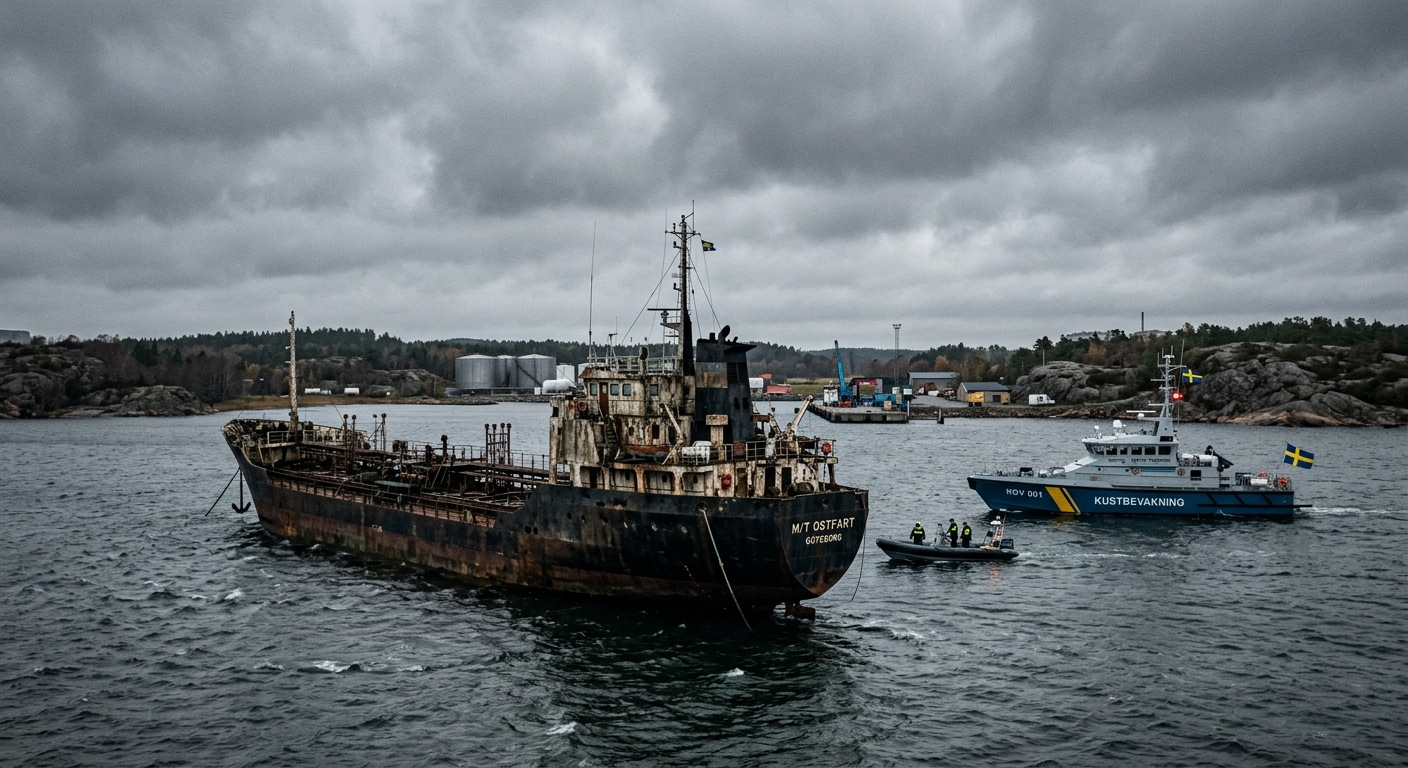
Swedish prosecutors just sent a clear message to the shadow fleet: your paperwork is now a liability. On May 4, authorities arrested the Chinese captain of the product tanker Jin Hui, charging him with the felony of presenting false documents to maritime officials. This arrest follows a string of five detentions since March, signaling that the Baltic Sea is no longer a permissive environment for vessels operating under questionable flags or dubious seaworthiness. As Sweden ramps up surveillance, the maritime industry is watching a shift from administrative fines to criminal prosecution.
The Jin Hui and the Art of the False Flag
The detention of the Jin Hui represents a tactical evolution in how coastal states manage high-risk vessels. Swedish authorities did not merely cite the tanker for a broken lifebuoy or a leaky valve; they targeted the very identity of the ship. By arresting the Chinese master on suspicion of using false documents, prosecutors are attacking the administrative foundations of the shadow fleet. These vessels often hop between "flags of convenience" that provide minimal oversight, but Sweden’s legal framework treats the presentation of forged registration or certification as a serious felony.
Beyond the paperwork, the Jin Hui faces scrutiny under the Swedish Maritime Code for a lack of seaworthiness. This dual-pronged approach—legal and technical—allows authorities to hold a vessel indefinitely while the investigation proceeds. For the master of the Jin Hui, the situation is precarious. Unlike previous years where a ship might pay a fine and sail, the current climate in the Baltic demands a higher price for entry. The vessel remains under detention, serving as a floating evidence locker for the Swedish Coast Guard.
The shadow fleet, characterized by aging hulls and opaque ownership structures, has long relied on the "plausible deniability" of its crew. However, the Swedish strategy of targeting the master directly puts the human element of the supply chain under immense pressure. If a captain can be held criminally liable for the documents provided by an anonymous owner in a distant jurisdiction, the risk profile for operating these vessels changes overnight. This is no longer just a cost-of-business fine; it is a potential prison sentence.
A Pattern of Baltic Enforcement
The Jin Hui is not an isolated incident but the latest chapter in a broader Swedish enforcement campaign. Since March, Sweden has detained five vessels, including the Sea Owl 1 and the Caffa. In the case of the Sea Owl 1, a Russian captain faced similar charges regarding false documentation. This consistent application of the law suggests a standardized protocol is now in place. Swedish officials are no longer looking for reasons to let ships go; they are looking for reasons to keep them in port.
This surge in activity reflects a strategic pivot toward environmental and security sovereignty. The Baltic Sea is a notoriously difficult body of water to navigate, with shallow depths and sensitive ecosystems. A single incident involving a substandard tanker could cause irreparable damage to the Swedish coastline. By aggressively policing the "shadow" elements of the fleet, Sweden is effectively outsourcing its environmental protection to its legal system. The message to operators is simple: if you cannot prove who you are or that your ship is safe, do not enter Swedish waters.
Interestingly, the Swedish authorities have shown a degree of pragmatic flexibility in other cases. In April, a tanker and a bulker were permitted to pay fines and depart after their deficiencies were addressed. This "carrot and stick" approach demonstrates that the focus is specifically on vessels that attempt to deceive the state. If a ship is honest about its flaws, it pays a fine. If it lies about its identity, the captain goes to jail. This distinction is critical for legitimate operators who may occasionally fall foul of minor port state control issues.
The Regulatory Angle
Under Swedish law, presenting false documents to authorities is a felony. This allows prosecutors to bypass the standard maritime fines and move directly into the criminal justice system, providing a much stronger deterrent against shadow fleet operations that typically hide behind shell companies.
The Caffa and the Ukrainian Connection
The case of the cargo ship Caffa illustrates the complex geopolitical web these vessels inhabit. Initially detained on suspicion of sailing under a false flag, the master was held for a month before being released. The prosecutor's office admitted that proving the captain "knowingly" presented false documents is a high legal bar. This release, however, did not mean the ship was free to go. In a surprising turn, the Caffa was subsequently seized at the request of Ukraine.
Ukraine alleges that the Caffa has been used to transport grain stolen from occupied territories. This development elevates the issue from a matter of maritime paperwork to one of international sanctions and war crimes. It highlights how the shadow fleet serves as the logistical backbone for illicit trade. A ship that lies about its flag is often a ship that is hiding its cargo's origin. Sweden’s detention provided the window of opportunity for Ukrainian authorities to file their legal claim, showing how port state control can facilitate international law enforcement.
The Caffa incident serves as a warning to the broader logistics industry. Vessels operating in the "grey zone" of maritime commerce are often involved in multiple layers of illegality. A freight forwarder or cargo owner might think they are simply getting a competitive rate on a spot charter, but they may unknowingly be funding sanctioned activities. The intersection of Swedish environmental law and Ukrainian property law in a Baltic port is a reminder that the maritime world is becoming increasingly interconnected and transparent.
The Environmental Mandate of 2025
Sweden’s aggressive stance is rooted in a long-term plan to increase surveillance in the Baltic. As early as 2024, officials signaled that 2025 would see a significant ramp-up in monitoring efforts. The current spate of arrests suggests this timeline has been moved forward or that the preparatory phase is already yielding results. The Baltic Sea is a "Particularly Sensitive Sea Area" (PSSA) as designated by the IMO, and Sweden is taking its role as a guardian of these waters seriously.
The risk posed by the shadow fleet is not theoretical. These ships often lack traditional P&I (Protection and Indemnity) insurance, meaning that in the event of an oil spill, the cost of cleanup would fall entirely on the coastal state. By detaining vessels like the Jin Hui for unseaworthiness, Sweden is performing a pre-emptive strike against environmental disaster. The "lack of seaworthiness" charge is a catch-all that can cover everything from engine failures to inadequate firefighting equipment, all of which are common in ships pushed past their natural retirement age.
Furthermore, the increased surveillance is likely aided by new technologies. Satellite tracking, AIS analysis, and drone patrols allow the Swedish Coast Guard to identify suspicious behavior before a ship even enters port. A tanker that turns off its transponder or makes unusual ship-to-ship transfers is immediately flagged. The arrest of the Jin Hui’s captain is the visible tip of a very large, data-driven iceberg. The Baltic is becoming a "smart" sea, where anonymity is increasingly difficult to maintain.
"The Baltic is no longer a permissive environment for vessels operating under questionable flags or dubious seaworthiness."
The Legal Burden of the Master
The focus on the ship's master is a calculated move by Swedish prosecutors. In maritime law, the master is traditionally responsible for everything that happens on board, including the validity of the ship's papers. By holding the captain personally liable, Sweden is putting pressure on the one person who has the power to refuse to sail a substandard vessel. While the owners remain hidden behind layers of shell companies in the Marshall Islands or Liberia, the captain is a tangible target for law enforcement.
However, the release of the Caffa’s master highlights the difficulty of this legal strategy. Proving "intent" or "knowledge" of a forgery is complex. A captain might argue they were simply handed a folder of documents by the owner and told to sail. Despite this, the threat of a month-long detention in a Swedish jail is a powerful deterrent. Even if a conviction is not secured, the disruption to the vessel’s schedule and the legal costs involved are enough to make other masters think twice about taking command of a shadow fleet tanker.
This shift also has implications for the recruitment of maritime officers. High-quality officers are unlikely to risk their licenses and their freedom to sail on ships with questionable documentation. This leaves the shadow fleet with a shrinking pool of qualified labor, further increasing the risk of accidents. The Swedish crackdown is creating a feedback loop: more enforcement leads to higher risk for crews, which leads to lower-quality crews, which leads to more deficiencies and more detentions.
Market Implications for Freight Forwarders
Originally reported by [maritime-executive.com](https://maritime-executive.com/article/sweden-arrests-chinese-master-of-detained-shadow-fleet-tanker)
Originally published at maritime-executive.com.