

The Tank and the Tanker: Rheinmetall and MSC’s Strategic Pivot to Romania
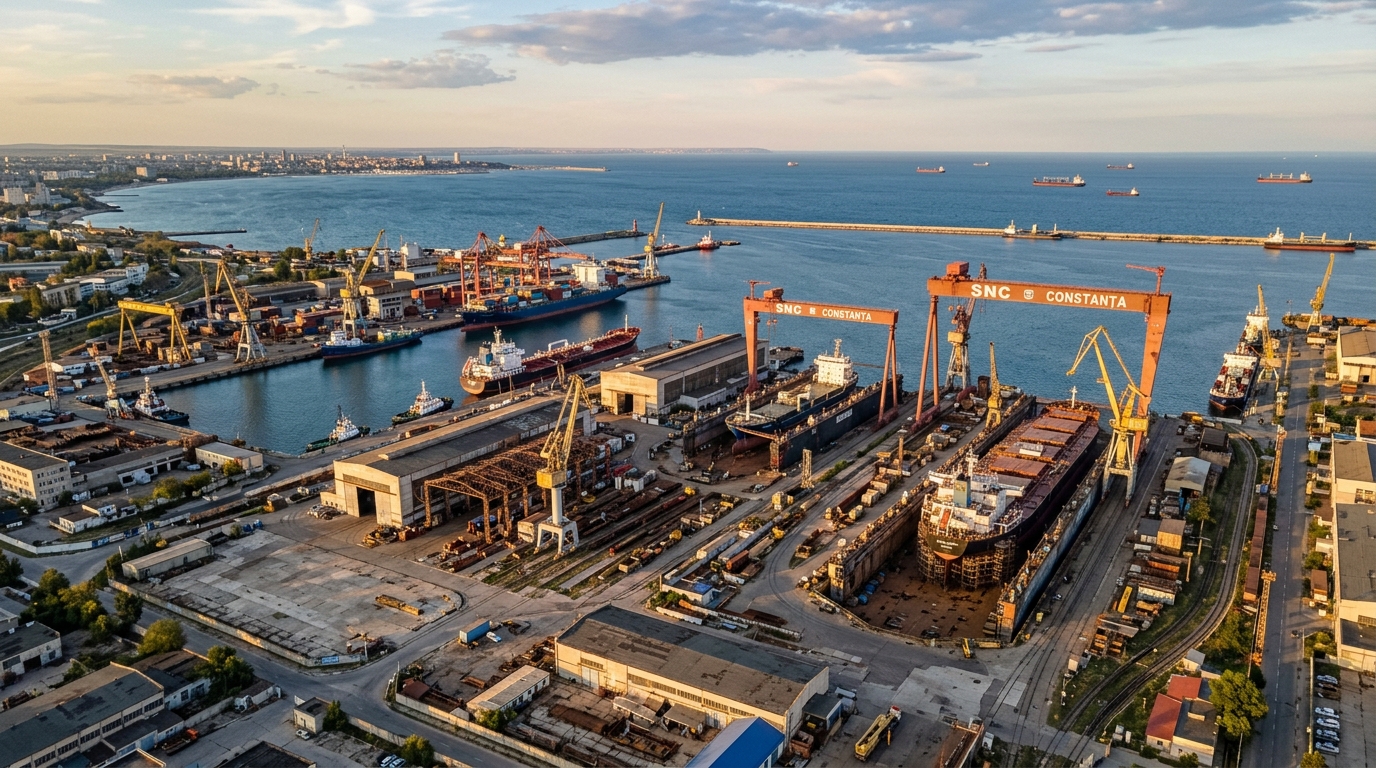
MSC and Rheinmetall are in talks to buy Romania's bankrupt Mangalia shipyard, a move that blends commercial shipping and defense in the strategic Black Sea.
TL;DR
MSC and Rheinmetall are forming a dual-purpose powerhouse to revive the bankrupt Mangalia shipyard.
The deal shifts MSC toward vertical integration by securing dedicated repair and construction capacity in the Black Sea.
Rheinmetall’s involvement signals a massive push for European naval defense production amid regional instability.
MSC usually buys container ships, not bankrupt Romanian shipyards in partnership with tank manufacturers. Yet, the world’s largest shipping line and Germany’s premier defense contractor are currently negotiating a deal to take over the Mangalia shipyard. This move represents a calculated bet on the strategic value of the Black Sea and the necessity of securing sovereign industrial capacity. As global supply chains fracture and regional tensions rise, the line between commercial logistics and national defense is becoming increasingly blurred.
Rheinmetall and MSC make for strange bedfellows on the surface. One builds the Leopard 2 tank; the other manages a fleet of over 800 container vessels. However, the synergy becomes clear when viewed through the lens of modern industrial policy. Shipyards are no longer just places to weld steel; they are strategic assets that require high-tech integration and massive capital. By partnering, these giants share the overhead of a massive facility while catering to two of the most recession-proof sectors: global trade and national security.
The Romanian government is playing the role of the matchmaker here. By contributing the land and existing assets of the Mangalia yard, the state retains a stake in its industrial future without having to foot the bill for its bankruptcy. For Rheinmetall, this is an entry point into naval defense in a region that is currently the front line of European security. For MSC, it is a way to bypass the multi-year waiting lists at major Asian and Western European shipyards for specialized vessels like tugs and ropax ferries.
The Mangalia shipyard has a history as complex as the ships it builds. Formerly known as the Daewoo-Mangalia Heavy Industries (DMHI), it was once a crown jewel of Romanian industry. When Daewoo exited, the Dutch shipbuilder Damen took the reins, but the partnership with the Romanian state eventually soured. Financial mismanagement and a shifting global market left the yard bankrupt, leaving thousands of skilled workers in limbo. This vacancy created a vacuum that MSC and Rheinmetall are now eager to fill.
Turning around a bankrupt yard is not for the faint of heart. The facility requires significant modernization to meet the standards of a company like MSC, which is increasingly focused on green propulsion and high-tech cruise ships. However, the "bones" of the yard—the dry docks and the access to the Black Sea—are irreplaceable. MSC’s proposal to pay for repair work in advance is a shrewd move. It provides the immediate liquidity needed to bring back the local workforce, ensuring that the yard is operational before the first new-build keel is even laid.
MSC is currently sitting on a mountain of cash following the pandemic-era shipping boom. While other carriers have spent their windfalls on air freight or logistics startups, MSC is doubling down on the assets that actually move the world. Owning a shipyard is the ultimate vertical integration. It allows a carrier to control its maintenance schedules, prioritize its own repairs during peak seasons, and experiment with new ship designs without sharing intellectual property with external competitors.
The carrier’s interest in cruise ships and ropax vessels at Mangalia is particularly telling. MSC Cruises is one of the fastest-growing brands in the travel sector. By securing a dedicated yard in Romania, MSC can insulate itself from the capacity constraints of Fincantieri or Chantiers de l'Atlantique. If they can successfully build a ropax or a tug in Mangalia, they prove that the yard is capable of complex engineering, paving the way for larger, more ambitious projects.
"Owning a shipyard is the ultimate vertical integration. It allows a carrier to control its maintenance schedules and prioritize its own repairs during peak seasons."
Rheinmetall’s interest in Mangalia is inseparable from the geopolitical reality of the Black Sea. Since the invasion of Ukraine, the region has become a focal point for NATO’s eastern flank. Romania is positioning itself as a hub for defense production, and Rheinmetall is its primary partner. By taking over a portion of the Mangalia yard, the German company can establish a naval division capable of producing corvettes, patrol boats, and perhaps even larger frigates for the Romanian Navy and other regional allies.
This isn't just about building new ships; it's about sustainment. Naval vessels in the Black Sea currently have limited options for major repairs without transiting the Bosphorus—a move that is restricted during times of conflict under the Montreux Convention. A Rheinmetall-managed yard in Romania provides a sovereign repair hub that can keep NATO-aligned fleets operational without relying on distant Mediterranean facilities. For Rheinmetall, this is a logical expansion from land-based systems into the naval domain, leveraging Romania’s low-cost but highly skilled engineering base.
For decades, the narrative of global shipbuilding has been one of retreat for Europe. China, South Korea, and Japan now account for the vast majority of global tonnage. However, the Mangalia deal suggests a counter-narrative: the return of strategic manufacturing to European shores. The pandemic and subsequent supply chain shocks proved that over-reliance on distant shipyards is a liability. When a carrier needs a ship repaired or a new vessel built to specific environmental standards, having a facility within the EU’s regulatory and geographic borders is a massive advantage.
The "Mangalia Model" could serve as a blueprint for other struggling European yards. By combining a steady stream of commercial work (from MSC) with high-value defense contracts (from Rheinmetall), the yard can maintain a consistent level of activity. This dual-use strategy mitigates the boom-and-bust cycles that typically plague the shipbuilding industry. If Romania can provide the political stability and the labor force, Mangalia could become a formidable competitor to the dominant yards in the Far East, at least for specialized and high-value vessels.
The Regulatory Angle
Any deal involving a state-owned asset and two foreign giants will face intense scrutiny from the European Commission. Competition authorities will look closely at whether the Romanian government’s contribution of land and assets constitutes illegal state aid. Furthermore, MSC’s growing dominance across the entire logistics chain—from ships and ports to now shipyards—might raise eyebrows in Brussels. However, the defense component led by Rheinmetall provides a strong "national security" justification that often smooths the path for such complex industrial mergers.
A shipyard is only as good as the hands that weld the hull. One of the greatest tragedies of Mangalia’s decline was the "brain drain" of skilled Romanian shipbuilders to yards in Germany, the Netherlands, and Norway. MSC’s proposal to pay in advance for repairs is specifically designed to reverse this trend. By offering stable, well-paid jobs back home, the new consortium hopes to lure back the diaspora of Romanian engineers and welders who have been powering the rest of Europe’s maritime industry for years.
The infrastructure challenge is equally daunting. Years of neglect have likely left the yard’s equipment in need of a total overhaul. MSC and Rheinmetall aren't just buying a yard; they are buying a massive renovation project. This will require a multi-year investment plan that includes digitizing the yard’s operations, installing automated welding robots, and upgrading the power grid to support the energy-intensive processes of modern shipbuilding. The Romanian government’s role in facilitating these infrastructure upgrades will be the litmus test for the deal’s long-term success.
For the broader logistics industry, the revival of Mangalia has immediate implications for vessel availability and schedule reliability. The Black Sea is a critical corridor for grain, fertilizer, and energy. However, it is also a graveyard for ships that can't find a repair berth after a mechanical failure or a minor collision. Having a high-capacity yard in Mangalia means that vessels operating in the region don't have to limp to Turkey or Greece for emergency repairs. This reduces downtime and keeps the flow of goods moving through Constanta and other regional ports.
Furthermore, MSC’s plan to build tugboats and ropax vessels at the yard addresses a specific bottleneck in the industry. As container ships get larger, the demand for powerful, modern tugs to assist them in port has skyrocketed. Similarly, the aging fleet of European ropax ferries needs replacement to meet new IMO carbon intensity standards. If Mangalia can specialize in these "workhorse" vessels, it will fill a market niche that larger Asian yards often ignore in favor of massive VLCCs or 24,000 TEU container ships.
This deal is more than just a business transaction; it is a moment of industrial pride for Romania. For too long, the country’s manufacturing sector has been seen as a source of cheap labor for Western brands. The partnership with Rheinmetall and MSC positions Romania as a co-investor in high-tech, high-value assets. It signals that the country is ready to move up the value chain, from simple assembly to complex system integration in both the commercial and defense sectors.
The success of Mangalia will depend on whether the private partners can navigate the often-turbulent waters of Romanian politics. Previous attempts to revitalize the yard failed because of a lack of clear communication and shifting government priorities. However, the involvement of a company as large as MSC and a defense giant as influential as Rheinmetall suggests that this time, the stakes are too high for the project to be allowed to fail. The eyes of the maritime world—and the defense world—will be on the Black Sea coast to see if this ambitious gamble pays off.
"The revival of Mangalia means that vessels operating in the Black Sea don't have to limp to Turkey or Greece for emergency repairs, reducing downtime and keeping the flow of goods moving."
How Exaqube Helps
The complex logistics of reviving a bankrupt shipyard and managing a multi-billion dollar fleet require absolute data clarity. DataSense provides the real-time operational visibility needed to manage large-scale infrastructure projects, giving stakeholders a unified view of everything from procurement to project milestones. Meanwhile, as MSC expands its regional repair capacity, ScheduleSense helps fleet managers track vessel movements and maintenance windows with precision. Knowing exactly when a vessel can enter a dry dock in Mangalia—and how that impacts the rest of the Asia-Europe schedule—is the difference between a seamless repair and a week of lost revenue.
The negotiations for the Mangalia shipyard mark a turning point for European maritime and defense strategy. By blending MSC’s commercial dominance with Rheinmetall’s military engineering, the consortium is creating a new kind of industrial powerhouse on the Black Sea. If the deal closes, it will not only secure Romania’s place in the global supply chain but also provide a critical hub for regional stability. For now, the industry watches to see if this "Tank and Tanker" alliance can successfully navigate the transition from bankruptcy to world-class production.
Originally reported by [maritime-executive.com](https://maritime-executive.com/article/rheinmetall-and-msc-in-negotiations-to-buy-romania-s-mangalia-shipyard)
Originally published at maritime-executive.com.